


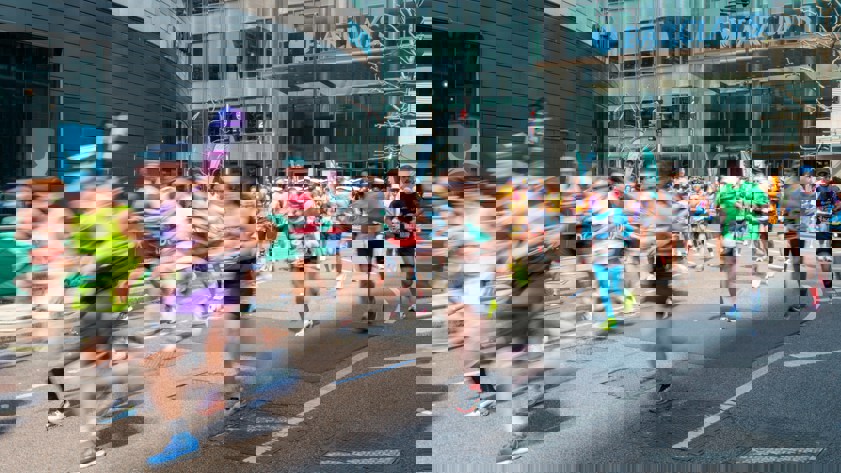
Heading to the London Marathon this weekend? More than 59,000 runners will take part this year, according to event organisers. Add thousands of spectators, and London’s roads will be under pressure.
If you plan to drive, small mistakes could lead to large fines. From common errors to lesser-known rules, Nationwide Vehicle Contracts highlights five driving fines you could face on marathon day.
Spanning the full 26.2 miles, the London Marathon weaves through many of the capital’s most iconic landmarks. However, much of the route also falls within London’s Ultra Low Emission Zone (ULEZ).
For those hoping to get close to the action by car, it's recommended to avoid areas such as Greenwich, the City of London, the City of Westminster and Southwark. Driving through these parts of the route could result in a £12.50 daily charge if your vehicle doesn’t meet the required emissions standards.
Failure to pay the charge can lead to a £180 fine, which increases by 50% if left unpaid after 28 days, bringing the total amount due to £270.
If you are about to run a marathon, you don’t want to have to walk miles to and from your car and you will want to get a parking space as close as possible.
Despite this, you should not settle for a parking space on the other side of the road. According to Rule 239 of the Highway Code, you can’t park your car facing oncoming traffic at night, or you can be fined up to £1,000, so make sure to return to your car before it gets dark.

After a long run, athletes may be tempted to take their trainers off and get into comfier shoes, such as flip flops and slippers. While it is not illegal to drive in flip flops or slippers, Rule 97 of the Highway Code states drivers must have appropriate footwear that does not prevent them from using the controls in the correct manner.
If stopped by the police, drivers can be charged with careless driving, which can result in a fine of up to £5,000, up to nine penalty points and even a driving ban.
Driving while excessively tired after a marathon would be considered dangerous driving and can pose serious risks, with 10-20% of all crashes estimated to be caused by driver fatigue.
Under rule 91 in the Highway code, it states you must “not begin a journey if you are tired” and “get sufficient sleep before embarking on a long journey”. Drivers found guilty of dangerous driving could be hit with an unlimited fine, driving ban and, depending on how serious it is, 14 years in prison.
Despite the London Marathon road closures being temporary, they are treated the same as a permanent road closure in the eyes of the law.
Driving through any closed roads can see drivers face a fine of up to £2,500. All road closures and the official vehicle crossing points can be found on the London Marathon website ahead of the event.
“Amongst the excitement of the London Marathon, please ensure you read up on road closures and official parking areas ahead of time. For those running the race, drive home safe or have a friend or family member drive you if they can.”

Plan your journey before you set off. Check your route, parking options, if you are running, arrange a safe way home in advance.
For more advice on road laws and safe driving, visit our motoring guides section.
Originally posted: 24th April 2026