
When you get behind the wheel of a new car, you can rest assured that it's safer and smarter than ever. One reason for this is because of technologies like advanced driver assistance systems (ADAS).
A combination of technologies including adaptive cruise control, automatic emergency braking, and lane-keeping assist, ADAS has changed the way we drive. And while it used to be limited to prestige cars, it's now standard on pretty much every new vehicle on the market.
If you've not driven with ADAS before, or you're trying to make sense of all the features, we've got you covered. In this blog, we'll walk you through what ADAS is, the key technologies involved, and why it matters when choosing your next car.
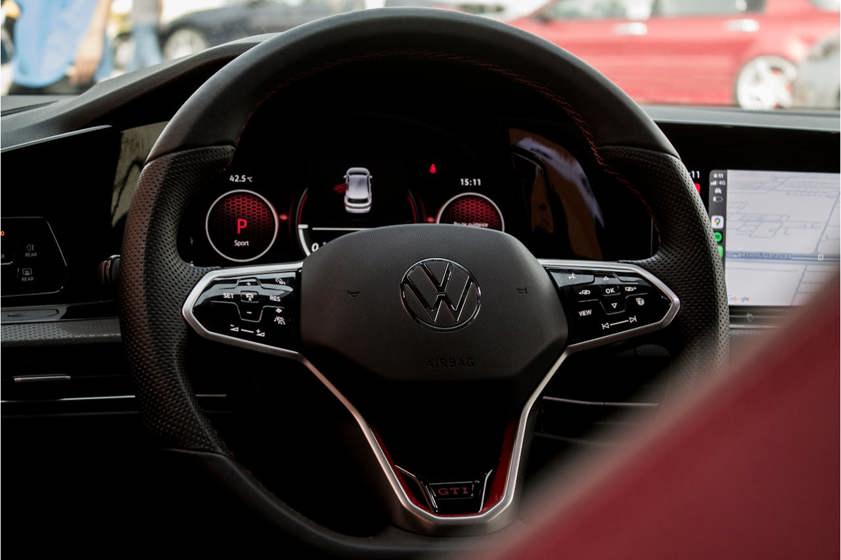
One of the main anxieties of getting behind the wheel is being involved in an accident. And in the vast majority of cases, human error is the cause. A moment of distraction, a misjudged gap, or a split-second lapse in concentration can be fatal.
ADAS exists to address exactly that. Through a network of cameras, sensors, radar systems, and artificial intelligence ADAS works alongside the driver to identify hazards and respond accordingly.
Sometimes, this is through visual or audio warning, and in certain situations, ADAS will actually take control of the vehicle itself.
Don't take the latter literally; in a lot of cases, ADAS can only control the brakes to prevent us from colliding with something or someone. The driver remains responsible at all times, and ADAS is there as a safety net.
Looking for a new car packed with the latest safety tech? Browse our full range of car lease deals and find your next car today.
If you're reading a car spec for the first time in a while, there will be a lot of words and phrases on there that you don't understand. ADAS is evolving fast, and the technologies available across the UK are expanding all the time.
Here are the key systems worth knowing about:

Adaptive cruise control (ACC) builds on conventional cruise control by doing more than just holding a set speed, it actively monitors the vehicle ahead and adjusts your speed to maintain a safe following distance.
If the car in front slows down, so does your car. If it speeds up, so do you.
Clever, right? It works through a system of cameras and radars that continuously feed data to the throttle and braking system in real time.
It's worth noting that most adaptive cruise control systems vary from manufacturer to manufacturer. For example, some only work at motorway speeds, while others can bring the car to a complete stop and then start again.
Automatic emergency braking (AEB) uses sensors, cameras, and radar to detect the risk of a collision with an object, pedestrian, or vehicle in your path.
If the system identifies a danger, it will alert the driver or even take preventive measures such as tightening seat belts and reducing speed. It's essentially like having an ever-alert co-pilot watching for any danger that you might miss.
AEB is widely regarded as the single most impactful ADAS technology on road safety, and it's now mandated on all new cars sold across Europe.
Lane-keeping assist (LKA) does what it says on the tin. It uses cameras to monitor lane markings and applies gentle steering corrections if your vehicle starts to drift without indicating. It's best thought of as a safety nudge rather than an active steering system.
Your car might also come with lane-departure warning, which warns you if you're crossing the white lines on either side of the lane. Both are useful, particularly on long motorway journeys when concentration naturally fades.

Changing lanes becomes safer with blind-spot assist, which uses radar sensors to continuously monitor the areas of your car that your mirrors can't fully cover.
If another vehicle is detected in your blind spot when you indicate, the system will warn you, usually through a light in the relevant wing mirror or an audible alert.
It's one of those features that's easy to take for granted until you drive a car without it. Picture merging onto a motorway and you don't have to panic about a car being in your blind spot! Motoring bliss!
Rear cross-traffic alert is designed for the moments when you're reversing out of a space and can't see what's approaching from the sides. Using sensors at the rear of the vehicle, it detects oncoming vehicles, cyclists, or pedestrians and alerts you.
It's a simple but effective feature that reduces the risk of low-speed collisions in car parks, driveways, and tight side streets. When paired with a rear-view camera, it makes reversing out of restricted spaces considerably less stressful.
If you learned to drive in a car without hill-start assist, you'll know the particular anxiety of stopping on a steep incline and trying to pull away without rolling back.
Hill-start assist removes that worry entirely by holding the brakes for a brief moment after you lift your foot off the pedal, giving you time to transfer to the throttle without the car moving backwards.

Active or adaptive headlights automatically switch between full and dipped beams when they detect oncoming traffic, eliminating the need to manually dip your headlights at night.
More advanced systems also pivot directionally as you steer through bends, lighting the road ahead rather than the hedgerow, and some use matrix LED technology to selectively dim individual sections of the beam around other road users, keeping full brightness everywhere else.
Road sign recognition uses a forward-facing camera to read and interpret road signs as you drive, then displays the relevant information, speed limits in particular, on your instrument cluster or head-up display.
You might be thinking what the point of this technology is, however, it goes a long way in educating drivers and improving safety. It can help us avoid speeding, reduce the chances of missing a speed limit change, and warn the driver of potential hazards.
Thinking about leasing a car with the latest safety tech? We've been helping UK drivers find the right car since 2002, with over 180,000 leases arranged along the way. As an independent broker, you'll always get straightforward pricing with no hidden surprises, and if you've got questions, our UK-based team are on hand to help. Browse our latest car lease deals.
Remember the scene in Mr. Bean's Holiday where he was sleepy driving? Hilarious, but seriously dangerous.
Driver attention detection would prevent exactly that. Using cameras and sensors, the system analyses driving behaviour, steering input patterns, lane position, and in more advanced systems, eye movement via a driver-facing camera, to determine whether the driver's attention is waning.
If it concludes you're not paying enough attention, it intervenes through an audio warning, a visual alert, or a haptic signal through the steering wheel.
Intelligent speed assistance (ISA) is one of the newer and more significant additions to the ADAS roster. Using a combination of GPS data and road sign recognition, it identifies the current speed limit and alerts you if you exceed it.
Since July 2024, ISA has been mandatory on all new cars sold across Europe under the EU's General Safety Regulation. While the UK hasn't formally adopted the regulation post-Brexit, most manufacturers include it as standard.
Traffic jam assist combines adaptive cruise control and lane-keeping assist into a single system designed to take the strain out of slow-moving traffic. It maintains a safe following distance from the car ahead, keeps the car centred in its lane, and can bring the vehicle to a complete stop and pull away when traffic starts moving again.
It won't appeal to everyone, and it certainly won't get you through the traffic any faster, but for anyone who regularly commutes on congested motorways or ring roads, it's one of the most practical ADAS features available.
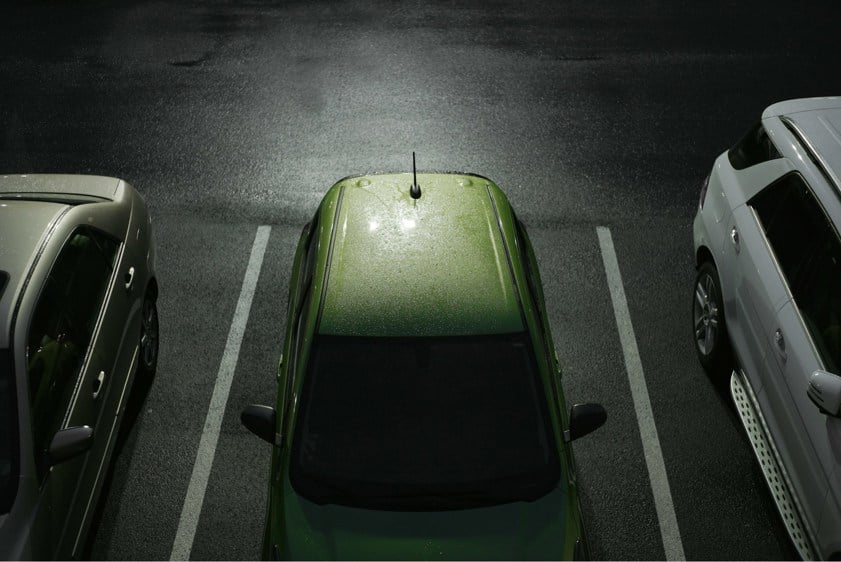
Automatic parking is probably one of the most talked-about ADAS features and, for many drivers, one of the most eagerly anticipated. Using a combination of cameras, radar, and ultrasonic sensors, the car identifies a suitable space and parks itself.
BMW's Parking Assistant Professional is one of the more capable examples on the market, able to identify and enter a range of spaces with minimal driver input.
If you've never driven a car with ADAS before, it can be frustrating. Sometimes you'll make a minor adjustment on the road, and before you know it, ADAS is beeping away saying you've done something wrong.
You'll probably start to question whether ADAS is actually worth it, but trust us, it is. Research from ScienceDirect suggests that the six most common ADAS technologies could reduce road accident frequency in the UK by nearly 24%, potentially preventing almost 19,000 accidents a year.
Automatic emergency braking (AEB) is the most impactful technology on the road. Thatcham Research has found that AEB reduces rear-end collisions by around 50% and car-to-pedestrian collisions by approximately 30%.
Look at the bigger picture and you'll support ADAS even more. Road fatalities in Great Britain have fallen by around 50% since 2004, and while ADAS isn't the sole reason for this, it certainly has played a significant part.
That said, the technology isn't faultless. Performance can dip in poor weather conditions or if there's dirt on camera lenses and radars, so always take this into consideration.
Beyond the statistics, ADAS makes everyday driving genuinely better. The stress of a long motorway journey is reduced when adaptive cruise control and lane-keeping assist are sharing the load.
Parking in a tight space becomes less of an ordeal when sensors and cameras are working with you.
It also reduces your insurance, as vehicles fitted with effective ADAS technology are typically assigned a lower insurance group.
And from a regulatory standpoint, ADAS is only going to become more prevalent. Key technologies like AEB and ISA are now mandatory on new cars sold across Europe, which means any new car you drive today is more comprehensively equipped than those of even five years ago.
The bottom line is that ADAS won't make you a better driver, but it will make you a safer one.
Ready to get behind the wheel of a car with the latest safety tech built in? Browse our full range of new car lease deals and find the right car for you.
Originally posted: 26th November 2024
Last updated: 22nd April 2026