


Twenty years ago, we were told electric cars would be the future of driving. Looking at the UK market today, that prediction has largely come true.
As of the end of February 2026, there were more than 1.88 million fully electric cars on UK roads (ZapMap), while the government is still working towards ending the sale of new petrol and diesel cars from 2030, with all new cars and vans due to be fully zero-emission by 2035.
But while EVs have taken centre stage, hydrogen cars have never fully disappeared from the conversation. In fact, many drivers still see them as a fascinating alternative. They offer zero-emission motoring, quick refuelling, and the sort of driving range that could make them a genuine long-term solution.
So, are hydrogen cars really the future of driving in the UK, or are they destined to remain a niche technology?
In this blog, we’ll look at how hydrogen cars work, why they sound so promising, the challenges holding them back, and whether they could ever become a realistic option for everyday motorists.
Curious about driving something different? Explore hydrogen-friendly options like the Toyota Mirai, with straightforward pricing from an independent leasing broker.
Yes, you’ve guessed it, a hydrogen car is one that’s… powered by hydrogen.
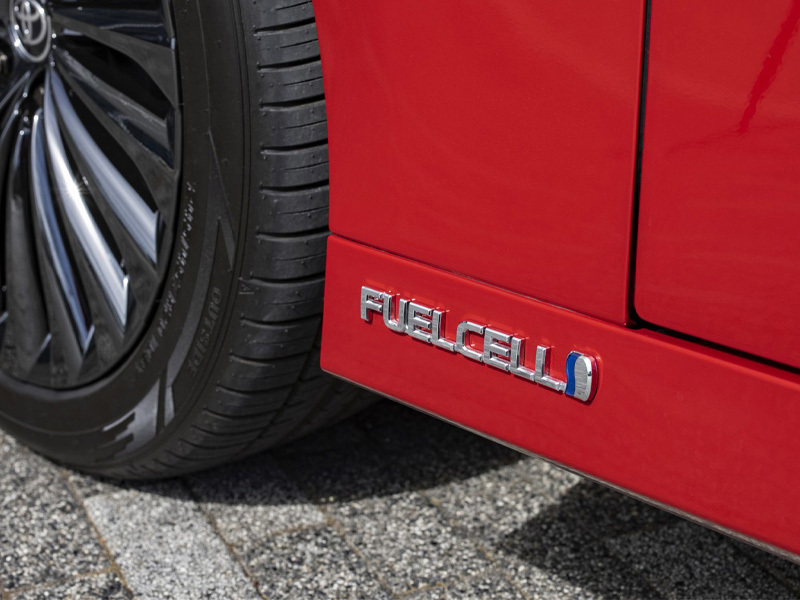
The most common type is a hydrogen fuel cell vehicle. These cars store hydrogen in pressurised tanks, and when that hydrogen is combined with oxygen from the air inside the fuel cell, it creates electricity. That electricity then powers the car’s electric motor, with a battery helping to store and deliver extra energy when needed.
The clever part is that the only tailpipe emission produced in the process is water vapour. That means hydrogen cars can deliver the smooth, quiet feel of an electric vehicle without producing harmful exhaust emissions while driving.
On paper, it sounds like the ideal answer. You get electric motoring without relying on long charging stops, which is exactly why hydrogen continues to attract attention.
The biggest selling point of hydrogen cars is convenience.
For many drivers, one of the biggest barriers to switching away from petrol or diesel is charging time. Even though public charging infrastructure is improving all the time, some motorists still worry about waiting around to top up their battery, especially on longer journeys.
Hydrogen cars tackle that problem head-on. Refuelling a hydrogen vehicle is much closer to the experience of filling up a petrol or diesel car. According to UK H2Mobility, a typical hydrogen car can be refuelled in around three minutes.
That makes hydrogen feel like a very natural next step for drivers who want cleaner motoring without changing their habits too much.
As promising as hydrogen sounds, there are still some major obstacles standing in its way.
The main challenge is the production itself. Not all hydrogen is clean. Much of the hydrogen produced today still comes from fossil fuels through a process called steam methane reforming. That means the environmental benefits depend heavily on how the hydrogen is made. Greener production methods, such as electrolysis powered by renewable energy, are developing, but they are still far less common and more expensive.
Cost is also another challenge, as is infrastructure. According to IGEM, there are currently only 16 hydrogen refuelling stations in the UK. By comparison, Germany has 96 and France has 21. IGEM also reports that three stations in the UK recently closed, highlighting just how fragile the current network still is.
At this stage, probably not.
For most private motorists in the UK, battery electric cars still look like the more realistic near-term option. They have a much bigger head start in terms of public awareness, government support, infrastructure, and model choice. EVs are no longer unusual, they are quickly becoming part of the motoring mainstream.
That does not mean hydrogen has no future.
Hydrogen may still have an important role to play in the wider picture, especially in areas where quick refuelling and long-distance driving matter most. It could prove particularly useful for larger vehicles and commercial fleets.
The UK government’s hydrogen strategy says hydrogen could make up 20% to 35% of final energy consumption by 2050, which shows there is still serious long-term interest in the technology. But that is very different from saying hydrogen passenger cars are about to become the norm on British roads.
The Toyota Mirai is perhaps the best example of why hydrogen cars remain so interesting.
It proves hydrogen vehicles are not just an idea for the future. They exist now and they work now. It’s a glimpse into a possible future where drivers can enjoy electric-style driving without long charging sessions.
However, flip the nail on its head and the Mirai is also hydrogen’s biggest problem. The vehicle is ready now and the wider market is not. The technology works, yet the hydrogen refuelling network is years behind where it needs to be, and is still too limited for most drivers to make the switch.
Want to learn more about leasing a Toyota Mirai? Our team offers expert UK support with a human touch, helping you understand your options in a simple, no-pressure way. Contact us today.
Hydrogen cars are definitely part of the conversation around the future of driving, but right now, they still feel more like a pipedream than a genuine option.
The technology is impressive, the refuelling process is quick, and cars like the Toyota Mirai show there is genuine potential there.
But there are also some very real barriers. Hydrogen is still expensive to produce, the UK infrastructure is extremely limited, and battery EVs have a huge advantage.
So, are they the future of driving? Possibly. But for most UK drivers, it seems hydrogen cars are years away.
Ready to explore the future of driving? Browse our latest lease deals with a broker that’s been trusted since 2002, with over 180,000 leases arranged.
Originally posted: 16th March 2026