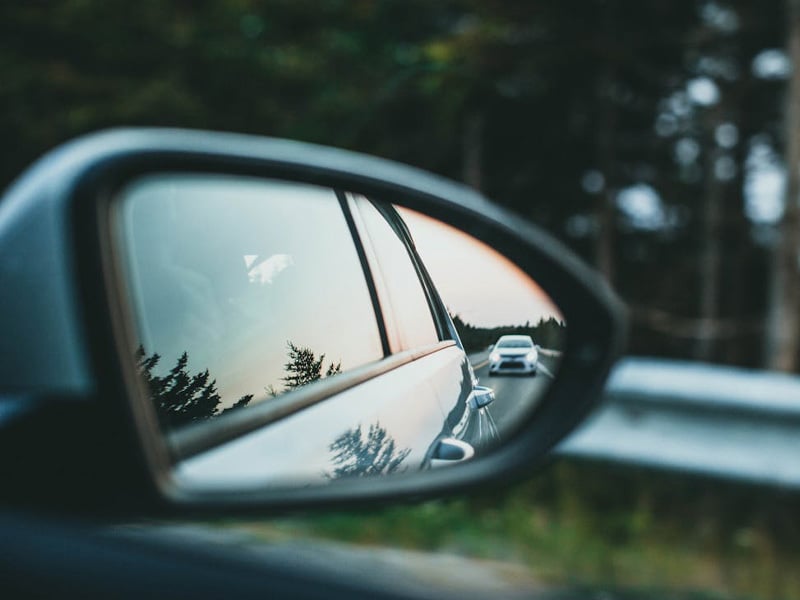
Whether you're aware of it or not, tailgating is one of those things we've probably all done once. And no, I'm not on about those weird NFL pre-game rituals they do in America, I'm on about when you drive too close to the car in front.
According to National Highways, an estimated 10 million drivers admitted they sometimes follow too closely without meaning to, and nearly 2.5 million confessed to deliberately closing the gap to push slower drivers to speed up.
While it may not seem like a big issue on a motorway, if there's only one lane and traffic is coming the other way, tailgating can be deadly. So deadly in fact, it contributes to more than 140 deaths and serious injuries on our roads each year (Fleet News)
In this blog, we look at the law on tailgating, how to avoid it, and how to stay calm on the road.
Tailgating is driving too close to the car in front.
Although there's no fixed distance that describes tailgating, what counts as 'too close' depends on your speed, the road conditions, and visibility.
For example, at 70mph on a motorway, being just a few car lengths behind would be dangerously close. But in slow-moving city traffic, a shorter gap is perfectly normal.
The Highway Code recommends leaving a two-second gap, but you can usually judge whether you're too close or not by using some common sense.
Yes, tailgating is considered an offence under Section 3 of the Road Traffic Act 1988, which covers driving without due care and attention or without reasonable consideration for other road users.
The standard penalty is a £100 fixed penalty notice and three points on your licence, but like all road offences, things can escalate quickly, including prosecution, if it leads to a collision.
It's also worth knowing that the authorities are getting better at catching tailgaters. National Highways has been trialling AI-powered camera technology on major motorways including the M1, M3, M6 and M20. Between 2017 and 2021, those cameras flagged over 844,000 possible tailgating incidents (Highway News).
“Most drivers don't set out to tailgate, but the consequences can be devastating. A two-second gap costs you nothing and could save a life.”

There's no denying that tailgating is rife on our roads.
Spend a couple of hours on a busy A-road or motorway, and you'll likely see plenty of cars creeping up too close in your rear-view mirror.
One in three UK drivers admits to tailgating, according to National Highways research. The problem was worst in London and the South East, where 41% of drivers admitted to driving too close.
Running late was named as the biggest trigger, alongside other factors like tiredness and commuting stress.
It’s not just a niche complaint, either. In a Which? survey, 56% of respondents ranked tailgating in their top three most annoying driving habits, and 81% said they witness it multiple times a month or more.
Tailgating isn't always deliberate. For many drivers, they drift too close without realising it. Here are some practical ways to keep a safe distance:
- Use the two-second rule - On faster roads, pick a marker, count the gap between you and the car ahead, and make sure there's at least 2 seconds between you.
- Stay aware of your speed - When driving on a motorway, it's easy to forget how fast you are driving. Every so often, check your speedometer and ensure you're within the speed limit.
- Stay patient - If the car in front is going slower than you'd like, wait for a safe opportunity to overtake.
- Keep left unless overtaking - If you're in the outside lane and not actively passing other vehicles, move back to the left.
- Check your mirrors regularly - Being aware of who's behind you helps you anticipate problems and adjust your driving smoothly.
Looking for a car that helps to avoid tailgating? Many new models come packed with safety features which automatically maintain a safe following distance. Explore our latest lease deals and get behind the wheel of a smarter and safer car.
Being tailgated can feel aggressive and intimidating, almost like you are being bullied. Here's how to handle it:
- Stay calm - Easier said than done, but getting angry or anxious will only distract you from the road. Don't let the tailgater push you into driving unsafely.
- Don't brake-check - Tapping your brakes to send a message or deliberately slowing down to annoy the driver behind is dangerous and can trigger road rage, or worse, an actual collision.
- Don't speed up - Don't succumb to the pressure of tailgating. Accelerating to create a gap often encourages the tailgater to speed up as well, making the situation worse for everyone.
- Let them pass - On a dual carriageway or motorway, move to the left lane when it's safe. On a single-carriageway, consider briefly pulling over to a safe spot to let them pass.
- Check your own driving - Are you hogging the middle or outside lane unnecessarily? Sometimes a quick self-check can resolve the situation.
- Don't try to police the road - It's not your job to teach another driver a lesson. Focus on getting yourself out of the situation safely.
Tailgating is illegal, dangerous, and far more common than it should be. Whether you're guilty of creeping too close to the car in front or you're the one being followed, understanding the law and knowing how to respond can make a real difference to road safety.
Keep your distance, stay calm, and remember: no journey is worth putting lives at risk.
Need help finding your next car? We've been helping UK drivers find the right lease since 2002, with over 180,000 leases arranged. Whether you want the latest safety tech or just a great deal, our friendly team is here to help.
Originally posted: 10th April 2026