Electric Car Maintenance and Servicing Explained
 By Fergus
Guide overview:
- Electric cars have fewer moving parts than petrol or diesel vehicles, which means no oil changes, no timing belt, and no exhaust maintenance - making them cheaper to service overall.
- While EVs need less maintenance than petrol cars, they still require regular attention, including annual servicing, tyre checks, brake fluid, and cabin filter replacements.
- Many EV batteries come with a warranty of around 8 years or 100,000 miles, but this varies by manufacturer and may depend on battery capacity limits and warranty conditions.
- When leasing an electric car, you're responsible for keeping up with the manufacturer's service schedule, routine maintenance, and returning the car in good condition.
Electric cars are often easier to maintain than petrol or diesel cars, but they’re not completely maintenance-free.
Because an EV has fewer moving parts, there’s no engine oil to change, no exhaust system to repair and no timing belt to replace. That can make routine servicing simpler and, in many cases, cheaper.
That said, you’ll still need to look after the basics. Tyres, brakes, brake fluid, coolant, lights, wipers, cabin filters and MOTs all still matter. And if you’re leasing an electric car, you’re responsible for keeping it maintained in line with the manufacturer’s service schedule unless you’ve added a maintenance package.
In this guide, we explain what maintenance an electric car needs, how EV servicing compares with petrol and diesel cars, what costs to expect, and whether adding maintenance to your electric lease is worth it.
Straightforward pricing from an independent leasing broker. Ready to see what an electric lease deal could cost? Browse our latest EV lease deals with clear, upfront monthly pricing.
- Electric car maintenance at a glance
- How EV maintenance differs from petrol and diesel
- Are electric cars cheaper to maintain?
- What maintenance does an electric car need?
- How often should an electric car be serviced?
- Do electric cars need an MOT?
- Who is responsible for maintaining an electric car on a lease?
Do electric cars need servicing? | Yes. EVs still need regular servicing, but they usually have fewer mechanical parts to maintain. |
|---|---|
Are electric cars cheaper to maintain? | Generally, yes, because there’s no engine oil, exhaust, clutch, timing belt or traditional gearbox to worry about. |
What still needs checking? | Tyres, brakes, brake fluid, coolant, cabin filters, lights, wipers, suspension and battery health. |
Do electric cars need an MOT? | Yes. Once an EV is three years old, it needs an annual MOT like any other car. |
Who maintains a leased electric car? | The driver is responsible for maintenance for the duration of the lease agreement. |
The biggest difference is what sits underneath the bonnet.
A petrol or diesel car has a combustion engine with lots of moving parts. It needs oil changes, spark plugs, filters, exhaust checks and other regular maintenance to keep it running smoothly.
An electric car is different. Instead of a combustion engine, it uses an electric motor powered by a battery. That means there are fewer parts that wear out over time.
Here’s a simple comparison:
Electric | Hybrid | Petrol / Diesel | |
|---|---|---|---|
Engine oil changes | |||
Exhaust | |||
Timing belt | |||
Clutch | |||
Traditional gearbox | |||
Tyres | |||
Brake pads | |||
Brake fluid | |||
Coolant | |||
Cabin filter | |||
MOT |
In many cases, yes, electric cars are cheaper to maintain than petrol or diesel cars.
That’s because EVs don’t need many of the regular service items associated with combustion engines. There’s no engine oil, oil filter, spark plugs, exhaust system or timing belt. There’s also less wear on brake pads because of regenerative braking.
Regenerative braking helps slow the car down while recovering energy back into the battery. Because the electric motor does some of the braking work, the traditional brake pads and discs may not wear as quickly as they would in a petrol or diesel car.
However, it’s important not to assume that electric cars are always cheap to run in every area.
Tyres can wear faster on some EVs because electric cars are often heavier than equivalent petrol cars. Instant torque can also put extra strain on the tyres if you accelerate sharply. Specialist repairs can also be more expensive if work is needed on high-voltage components or battery-related systems.
A balanced way to look at it is:
“Electric cars are generally simpler and cheaper to service, but they still need regular checks, and costs can vary depending on mileage, driving style, tyre wear, repair complexity and whether your lease includes a maintenance package.”

Electric cars have fewer traditional service items, but there are still several areas that need regular attention.
The battery is the heart of an EV and is rightly the component most people worry about. The good news is that modern EV batteries are much better than they were 5 years ago and can last 10 to 20 years, with research suggesting that the vast majority of second-hand EVs retain 90% of their original capacity.
Most manufacturers back this up with a comprehensive battery warranty (usually eight years or 100,000 miles). So, if a fault is covered by the warranty, the manufacturer may repair or replace the battery, subject to the warranty terms.
Always check first. If something has gone wrong with your EV battery, don't assume anything. Get in touch with our team, who can talk you through warranties (if applicable) and next steps. Contact one of our experts today.
Although EV battery technology has advanced rapidly in recent years, batteries still degrade naturally. Here are some practical steps you can take to slow it down.

Keep DC charging to a minimum
Fast chargers are useful on motorway journeys, but using them as your primary charging method day-to-day can generate heat inside the battery and accelerate wear over time.
Home charging, which is slower and cooler, is better for long-term battery health.
Check out our EV Charging guide for more information.
Don't let the battery run completely flat.
This is a bit of a no-brainer, but don't let your battery run flat. It puts unnecessary strain on the cells and speeds up degradation.
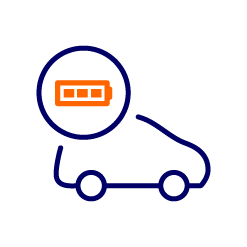
Keep charge between 20% and 80%
Only charge to 100% when you genuinely need the full range for a long journey. Most modern EVs let you set a charging limit in the car's settings or via an app.
Tyres are one of the few areas where an EV can cost more to maintain than a petrol equivalent.
This is because of weight. EVs are generally heavier than their combustion-engine counterparts, and with the instant torque from an electric motor, the tyres wear faster.
We recommend that you check tyre tread depth and pressure regularly, rotate your tyres every 6,000 to 8,000 miles to even out wear, and look for signs of damage.
Electric cars still have normal brakes, but they also use regenerative braking.
This slows the car using the electric motor and recuperates the energy back into the battery. As a result, the brake pads and discs may last longer than they would in a petrol or diesel car.
However, this doesn't mean that the brakes can be ignored.
Because the friction brakes may be used less often, they can still suffer from corrosion, especially if the car is left parked for long periods or mostly driven gently. Brake fluid also needs checking and replacing according to the manufacturer’s schedule.
Electric cars still have cabin filters, just like petrol and diesel cars.
The cabin filter helps clean the air entering the car’s interior through the heating and ventilation system. Over time, it can become clogged with dust, pollen and dirt.
Most manufacturers recommend replacing the cabin filter at set intervals, often during routine servicing.
Electric cars don't need coolant in the same way as petrol or diesel cars, but many EVs still use coolant to help manage battery and electrical system temperatures.
Coolant levels and condition should be checked during servicing. You should not usually top up EV coolant yourself unless the manufacturer specifically says it’s safe to do so, as EV cooling systems can be more complex than traditional systems.
If you notice a coolant warning light on your EV, book the car in for inspection.
Unsure what to check? EV maintenance can feel unfamiliar if you're used to petrol or diesel cars. If you're unsure what needs checking or want to know whether maintenance is included in your lease contract, give us a call today and we'll be happy to help.
Everyday maintenance still matters on an electric car. Regularly check your lights, indicators, windscreen wipers, and washer fluid as you would on a normal car.
These checks are simple, but they’re important for safety and MOT compliance.
Electric cars can be heavier than equivalent petrol or diesel cars, which means the suspension and steering components still need regular inspection.
The important components will be checked during a service or MOT, but if you notice a strange noise or pull when driving, get it checked.
Modern electric cars rely heavily on software. This can control everything from battery management and charging to infotainment, driver assistance systems and efficiency settings.
Some updates happen over the air, while others may need to be completed by a dealer or approved technician.
Keeping software up to date can help improve performance, fix bugs and maintain compatibility with charging networks or connected services.
Electric car service intervals can vary, but a general rule of thumb is to complete the service every year or 12,000 miles (like any other car).
If you're leasing, a missed service could lead to charges at the end of the lease. Check the correct interval in your vehicle handbook.
Yes, electric cars need an MOT once they are three years old. After that, they need one every year.
The difference between a petrol/diesel car and an EV is what gets tested. Because electric cars have no combustion engine, there's no emissions test, and the tester won't be checking exhaust gases or engine components.
Everything else is checked just as thoroughly as it would be on a petrol or diesel car.
What an electric car MOT covers

Record MOT
The vehicle is logged onto the official MOT test system.

Lights, horn, and wipers
All lights are checked for function, brightness, and alignment. The horn and wipers are also tested.

Seatbelts and windscreen
Seatbelts are inspected for condition and function, and the windscreen is examined for cracks or chips that exceed the permitted size.

Steering, suspension, and wheels
The steering system, suspension components, shock absorbers, and wheel bearings are all checked. Each wheel is spun to check for wear or damage.
Bodywork and corrosion
The chassis, sills, mounting brackets, and underbody are inspected for rust and corrosion.

Brakes
A brake test is conducted on a rolling road to check performance and balance, and discs and pads are visually inspected.
Electrical systems and battery
The high-voltage electrical systems, including the condition of the battery pack, are checked to confirm they're functioning safely.
It's worth noting that an MOT isn't the same as a full electric car battery check. The tester may inspect key EV components, but they won't usually carry out a full assessment of the battery.
If you lease an electric car, you’re responsible for keeping it in good condition throughout the lease.
You'll need to:
- Follow the manufacturer's service schedule
- Book services on time
- Keep records of servicing and repairs
- Arrange MOTs when required
- Repair damage beyond fair wear and tear
If your lease doesn’t include maintenance, you’ll need to arrange and pay for servicing, replacement tyres, MOTs and repairs yourself.
You’ll also need to make sure any work is carried out by an approved garage or in line with the manufacturer’s requirements.
If you add a maintenance package to your electric lease, many of the regular running costs can be included in your monthly payment.
Exclusions can apply, so it's important to check what's included before you sign the agreement.
A maintenance package can be very useful if you want predictable monthly costs and don’t want to manage servicing and tyre costs separately.
Electric cars are generally easier to maintain than petrol or diesel cars because they have fewer moving parts and fewer traditional service items.
There’s no oil to change, no exhaust system, no timing belt and less wear on the brakes thanks to regenerative braking. For many drivers, that means simpler servicing and lower maintenance costs.
But electric cars still need looking after. Tyres, brakes, brake fluid, coolant, wipers, lights, suspension, software and MOTs all remain important.
If you're leasing an EV, keeping up with maintenance is your responsibility. Adding a maintenance package can make this easier by rolling many routine costs into one monthly payment.
Guide Information
Originally published: 5th March 2021
Last updated: 27th April 2026
Due to be reviewed: 27th April 2027

You may also like...