Are Hybrid Cars Good for Daily Commuting?
 By Alex
Guide overview:
- Hybrid cars are well suited to daily commuting, especially in stop-start urban traffic where the electric motor can do most of the work.
- Self-charging hybrids are perfect for longer or motorway-heavy commutes as they don't need to be plugged in. PHEVs deliver bigger savings if your commute is short and you can charge overnight at home or at work.
- In stop-start commuting conditions, hybrid drivers can expect significantly better fuel economy than a equivalent petrol or diesel.
- Leasing a hybrid is one of the smartest ways to drive your perfect commuter car, with fixed monthly costs and the flexibility to upgrade when your contract expires.
If you're driving into work every day and feeling the squeeze of rising fuel costs, it's likely a hybrid car has crossed your mind.
It's a fair thought. Hybrids sit between a traditional petrol car and a fully electric vehicle, and for commuters, they can make a lot of financial sense.
But with self-charging hybrids, plug-in hybrids, and mild hybrids all being an option, knowing which version is right for your commute isn't always straightforward.
In this guide, we'll explore why hybrid cars are a good option for commuting, which versions are best, and the best hybrid cars to consider.
Already know a hybrid is right for you? We've been trusted since 2002, with 180,000+ leases arranged. Browse our hybrid lease deals and get behind the wheel of your dream commuter car.
Yes, hybrid cars are brilliant commuter cars.
Most commutes involve a lot of stop-start driving (as I'm sure you're aware). Every time you queue, brake, or crawl through your town centre, it's fuel wasted in a normal car.
However, when in a hybrid car, commuting is easier and more economical. You can travel at low speeds on pure electric power, saving you fuel in the long term, and if the hybrid car features regenerative braking, you'll recuperate energy back into the battery every time you brake.
“Hybrid technology comes into its own during urban commutes. Regenerative braking and electric-only driving make a real benefits at lower speeds, and can help you save noticeable fuel costs in the long term. ”

Before choosing a certain model, make sure that you're fully aware of the different types of hybrids.
A mild-hybrid uses a small electric motor to assist the petrol engine, reducing reliance on the engine and improving efficiency.
A mild-hybrid can't power the car on electricity alone, and is the most subtle of the three.
A self-charging hybrid combines a traditional petrol engine with an electric motor, and as you can probably guess, it charges itself.
Through technologies such as regenerative braking, every time you brake or coast, energy is recuperated and converted into electricity. The electric motor then uses that energy to assist the engine, particularly during stop-start driving.
For commuters who can't charge at home, a self-charging hybrid is a great choice.
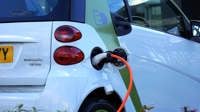
A PHEV has a much larger battery than a self-charging hybrid and can be charged from a home or public charger.
That means you'll get a generous electric-only range, usually somewhere around 40 miles, which can cover a lot of daily commutes.
If you can charge overnight, a PHEV can deliver massive fuel savings.
For most commuters, yes. But the amount of savings you make depend on how you drive and which hybrid you choose.
For urban commuting, a self-charging hybrid can return significantly better fuel economy than a petrol counterpart. For example, a Toyota Yaris returns up to 56mpg in hybrid form, and if these figures hold up (which they tend to do for hybrids), you'll save a fair bit of cash on fuel.
PHEVs can increase your savings. If you're charging overnight and your daily commute falls within the car's electric-only range, you could complete your daily commute without using a single drop of fuel.
Hybrids are a great choice for commuting, but they're not everyone's cup of tea:
- Motorway commutes - If the majority of your commute is at 70mph on the motorway, the hybrid system has limited opportunity to do its job. Regenerative braking will only kick in when you slow down, and the electric motor is less efficient at higher speeds.
- Mild hybrid caveats - The efficiency gained from a mild-hybrid is modest. If you're expecting massive savings, you may be disappointed.
- PHEVs need charging discipline - A plug-in hybrid delivers its best savings when charged consistently. If you don't have access to home charging or choose not to charge, there's almost no point going for a hybrid.
Not sure where to start? Here are four hybrids that stand out for commuters.

1. Toyota Yaris Cross
The Yaris Cross is a compact SUV that's perfect for commuters looking for something reliable, practical, and economical. Officially rated at up to 62mpg, its self-charging hybrid system thrives in stop-start traffic, so if your office is in the city, we'd definitely recommend.
You'll also get useful technology like a pre-collision warning system, lane departure alert, and a responsive 10.5-inch touchscreen display.

2. Hyundai Tucson
The Tucson is a family SUV that's perfect for those with access to charging. With up to 44 miles of electric-only range, most daily commutes can be completed without touching the petrol engine at all. Just charge overnight or while at work and you'll make substantial running cost savings.
The tech on offer is impressive too, with a pair of 12-inch displays on the dashboard, blind-spot view monitor, and highway driving assist 1.5, which utilises sensors and map data to automatically adjust speed to maintain a safe distance to the vehicle ahead

3. Ford Kuga
The Ford Kuga is a mid-size SUV and one of the most practical plug-in hybrids on the market for commuters. With up to 41 miles of electric-only range on a full charge, most daily commutes can be completed without touching the petrol engine at all.
Charge overnight and you could easily get through the working week on very little fuel.
Tech on board includes a 13.2-inch SYNC 4 touchscreen with wireless Apple CarPlay and Android Auto, matrix LED headlights, and Ford's Blind Spot Information System, all really useful on a daily commute.

4. Honda Civic Hatchback
If you're looking for something a bit different, the Civic Hybrid is a superb option. Efficient, refined, and really enjoyable to drive, this self-charging hybrid will take your commute to a whole new level.
With up to 56.6mpg and a driving range of up to 521 miles with a full tank of fuel, it's perfect for commuters who need to balance motorway driving and city driving. At low speeds the engine switches off, with the car running purely on electric power. You'll also get regenerative braking and some of the finest driver assistance tech on the market.
Guide Information
Originally published: 9th June 2026
Due to be reviewed: 9th June 2027

You may also like...