Best in-car technology for commuters: the features that make every journey better
 By Alex
Guide overview:
- Infotainment is key to a great commuter car. Look for features like wireless CarPlay or Android Auto, a responsive screen of at least 10 inches, and voice control.
- Driver assistance systems like adaptive cruise control, lane keep assist, and traffic jam assist can significantly reduce fatigue and stress on motorway and city commutes.
- Features like head-up displays, wireless charging, 360-degree cameras, and parking assist are worth prioritising if you regularly drive in urban environments.
- Leasing is a practical way to stay current with in-car technology. A two to four year lease means you're always driving a car with the latest systems and software.
A lot of drivers view the commute in a shroud of grey and nothingness. You hit the road, complete the journey, and arrive at work. It's just another day.
But the right in-car technology can completely change that. Gone are the days of cars being basic, even entry-level commuter cars now come with features that can take your daily drive to the next level.
The key is choosing a car with the right technology for your commute. Whether you're a podcast listener, a music lover, or someone who needs to stay connected on the move, there's plenty of tech that can make your commute more enjoyable and less stressful.
In this guide, we'll break down the features that actually matter on a daily commute, and the cars that deliver them best.
Ready to find a commuter car with the tech to match? Head over to our car leasing for commuters page to find out more. We've been trusted by drivers since 2002, with over 180,000 leases arranged.
The priorities of a commuter have changed drastically in the last twenty years. In the pre-technology era, drivers were more than happy listening to the same radio station, every day, five days a week.
That's no longer the case. Today's commuters expect smartphone connectivity, driver assistance technology, and, depending on the model, features like one-pedal driving that simply didn't exist in mainstream cars a decade ago.
The pace of change matters too. Thanks to how quickly in-car technology is advancing, a three-year-old car can already feel dated in its infotainment and driver assistance package. If you're behind the wheel every day, that gap becomes harder to ignore. You want features that make your life easier, and that's entirely reasonable.
“A commuter car that works for you changes the entire shape of your day. The right technology means less stress, fewer distractions, and a journey that sets you up rather than wears you down.”

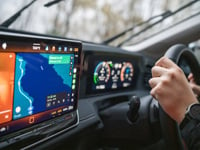
For most commuters, the infotainment system is where the daily driving experience is won or lost. Although virtually all new cars now come with a touchscreen display, the quality and features on offer vary significantly from model to model.
Here's what to look out for:
- Apple CarPlay and Android Auto - arguably the most important feature for a commuter car. Through smartphone mirroring, you can sync your phone to the screen, playing music, managing messages, and answering calls hands-free. Look for wireless compatibility if you'd rather not deal with cables every morning.
- Screen size and responsiveness - bigger and more responsive is better. A screen of at least 10 inches gives you enough real estate to glance at navigation or controls without taking your attention off the road. A good balance of touchscreen and physical buttons is worth looking for too.
- Voice control - for those who'd rather not touch the screen at all, voice control is a genuine upgrade. It keeps your hands on the wheel and your eyes on the road.
- DAB radio - for all the talk of streaming and connectivity, sometimes you just want the radio. If that sounds like you, make sure DAB is included.
Driver assistance technology has changed daily driving more than almost any other development of the last decade. The features available now, across a wide range of lease cars at accessible price points, can make motorway miles less tiring, city driving less stressful, and every journey that bit safer.
What you need depends largely on the nature of your commute.
- Adaptive cruise control - rather than holding a fixed speed, adaptive cruise control automatically adjusts to maintain a safe gap from the car ahead. On longer commutes, the reduction in fatigue is significant. It's one of those features that quickly becomes difficult to drive without.
- Lane keep assist - works alongside adaptive cruise control to keep you centred in your lane, gently steering you back if you begin to drift. Some base trim cars only offer a warning alert rather than active correction, so it's worth double-checking.
- Traffic jam assist - the most underrated feature for urban commuters. It combines low-speed adaptive cruise control with lane centring, allowing the car to manage itself in slow-moving traffic. If a significant portion of your commute is spent crawling through congestion, this feature alone can transform the experience.
- Automatic emergency braking - detects a potential collision and applies the brakes if you don't react in time. Virtually standard across all new cars now, but worth confirming on lower trim levels before you commit.
- Blind spot monitoring - alerts you when a vehicle is sitting in your blind spot, typically via a warning light in the door mirror. Particularly valuable on urban dual carriageways and multi-lane roads where lane changes happen frequently and quickly.
- Driver fatigue monitoring - uses cameras or steering input analysis to detect signs of reduced concentration and prompt you to take a break. Easy to overlook when speccing a car, but especially relevant for early morning starts and late evening finishes, when tiredness is hardest to recognise in yourself.
- Speed sign recognition - reads roadside speed limit signs and displays the current limit on your dashboard. Particularly useful in unfamiliar areas and on routes where limits change without much warning.
Not sure which tech package is right for your commute? Our expert team can help you find the right car for your daily drive, just give us a call. Contact us today.
Infotainment and driver assistance systems have become expected features of any new car. But if you're looking to go further, a head-up display is worth serious consideration.
A head-up display projects relevant information, such as your speed, navigation, and driver assistance alerts, directly onto the windscreen and into your line of sight. Rather than glancing down at your instrument cluster mid-journey, the information comes to you.
For commuters navigating busy roads or an unfamiliar route, the reduction in distraction is more valuable than it might sound.
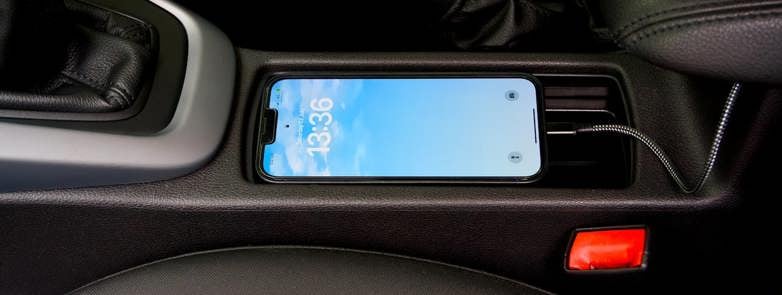
For commuters, wireless charging isn't essential, but once you've used it, it becomes very difficult to go back. Put your phone on the pad, drive to work, and you'll likely have a full battery.
It's worth paying attention to charging speed, as not all charging pads are the same speed. Some charge notably slower than a standard charger, which can frustrating (or even pointless) if you have a short commute.
On ports, most new cars offer at least one of each (USB-A and USB-C), but it's worth checking what comes as standard on your chosen trim than than assuming.
Parking technology might sit lower down your priority list when choosing a commuter car, but if you're driving into a city, it can be just as important as anything else in this guide.
Think about it: the last thing you want is a smooth, stress-free commute undone by a tight multi-storey space or a tricky parallel park. Some form of camera technology is crucial, whether that's front and rear cameras or a 360-degree camera (which stitches together a bird's-eye view of the car and its surroundings), and features like rear-cross traffic alert and automatic parking are nice-to-haves.
Most new cars come with a built-in navigation system, but for the majority of commuters, Google Maps or Waze via CarPlay or Android Auto will be the more practical choice day-to-day.
The reason is pretty straightforward: they update far more frequently.
That said, built-in navigation has its advantages. It runs on a larger screen, doesn't drain your phone battery, and works without a mobile data connection.
For most commuters, we recommend getting a car with a large screen and wireless smartphone mirroring, for the best of both worlds.

1. Volkswagen Golf Hatchback
One of the most consistently well-specced cars in its class. The latest generation brings wireless CarPlay and Android Auto as standard across most trims, alongside a strong driver assistance suite and a refined digital instrument cluster.

2. Peugeot 308
Peugeot's i-Cockpit setup remains one of the more distinctive digital dashboards on the market, with a compact steering wheel and a high-mounted display that works similarly to a head-up display.

3. SEAT Leon Hatchback
Punches above its price point for technology, offering wireless connectivity, a responsive touchscreen, and a solid driver assistance package on mid-range trims. A strong choice for commuters who want strong spec without breaking the bank.

4. Kia EV3
For commuters seeking an electric car, the EV3 offers an impressive technology package including a large dual-screen setup, over-the-air software updates, and strong driver assistance across the range.

5. BMW i4
The i4's curved display, heads-up display option, and comprehensive driver assistance suite make it one of the most complete technology packages available on a lease.

6. Peugeot e-3008
Combines an augmented reality head-up display with a panoramic i-Cockpit screen and strong EV-specific technology. One of the most visually striking interiors currently available, and a genuine talking point for tech-motivated commuters.
Looking for a broader view of the best lease cars for your daily drive? Read our guide to the best cars for daily commuters for a full breakdown across every commuter type.
Technology is the single area where a car dates fastest. A five-year-old car might still drive beautifully, but its infotainment, driver assistance, and connectivity features can feel behind what's available today.
For a commuter spending time behind the wheel every day, that gap is hard to ignore.
Leasing removes that problem. With a typical cycle of two to four years, you're always within reach of the latest systems and software.
If staying current with technology matters for your daily commute, leasing is the most straightforward way to make sure your car never falls behind.
See what's available today. We're an independent leasing broker, offering straightforward and transparent pricing. Browse our latest deals today.
Guide Information
Originally published: 4th June 2026
Due to be reviewed: 4th December 2026

You may also like...