


Whether you’re doing the school run, heading to football practice, or tackling a long family drive, there’s one thing every parent wants: everyone arriving in one piece.
Unfortunately, that's not always the case. According to a Child Accident Prevention Trust (CAPT) report, 2,380 children were seriously injured in road accidents last year, highlighting the importance of following the correct advice.
Road safety isn't just doom and gloom stuff, it's everyday habits that go a long way to ensuring your little ones are safe on the road. In this blog, we've put together our top tips for keeping your young ones safe in the car.
In the UK, children must normally use the correct child car seat until they’re 12 years old or 135cm tall (whichever comes first) (Gov.uk).
When buying a car seat, make sure it's approved for UK use:
- Height-based seats - look for a label with a capital 'E' in a circle and ‘R129’
- Weight-based seats - look for the 'E' mark and 'ECE R44'
NOTE: If you're using a height-based seat, it must be rear facing until your child is over 15 months old.
Car seats vary, and not every seat fits every car. Your best bet:
- Follow the manufacturer’s instructions (seat + car)
- If you’re using a seat belt install, you generally need a belt with a diagonal strap, unless the seat is designed for a lap belt or uses ISOFIX
- Re-check the fit regularly (especially after anyone else has helped or the seat’s been moved)
You should also take coats and puffy jackets off before strapping in, and never take your child out the car seat when the car is moving.
Looking for a car that makes fitting car seats easier? From wide-opening rear doors to easy-to-reach ISOFIX points, some models are simply better set up for family life. Read our guide: Best Cars for Young Families
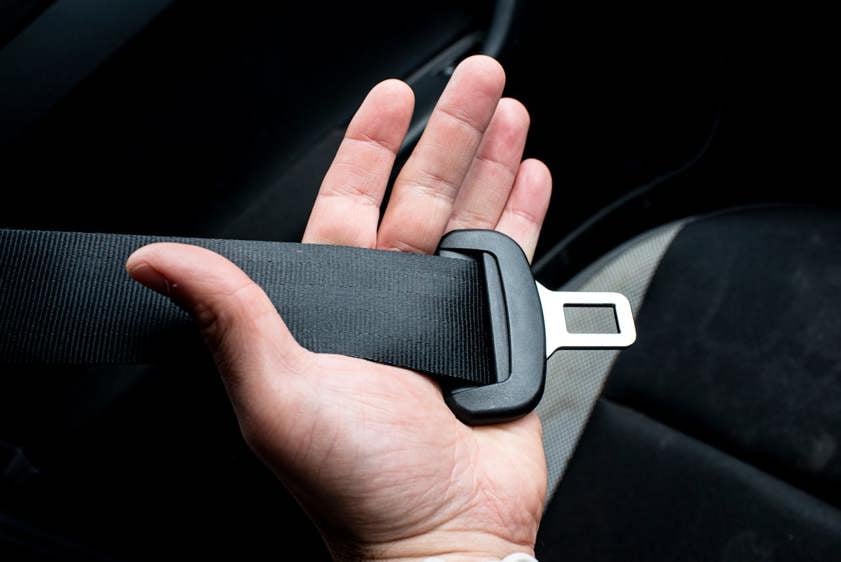
It’s illegal to travel without a seat belt (unless you’re exempt), and the driver is responsible for ensuring children are restrained correctly.
- The driver must ensure any child under 14 is in the correct car seat or wearing a seat belt as required
- You can be fined up to £500 if a child under 14 isn’t properly restrained (GOV.UK)
Fit the belt properly
- One belt = one person. Never share a belt between an adult and child (or two kids)
- Never carry a child on your lap in a moving car
“You can set a good example for children by always wearing your own seatbelt and only start driving when all seat belts are done up.”

Modern cars are packed with family-friendly safety features… but they only help if you actually switch them on.
These prevent doors being opened from the inside. If you’re not sure where yours are, check your handbook (it’ll take two minutes, and it’s worth it).
Electric windows can trap little fingers if pressed at the wrong time. Use the window lock so the driver controls them.
Never leave children unattended in a car, even for a minute. Even if you’re only planning on stepping out of the car for a few minutes, a variety of dangers and hazards might arise. They might:
- wriggle out of straps
- mess with controls
- become distressed
- overheat fast in warm weather
Safety bodies warn that a child’s body temperature rises much faster than an adult’s, and hot cars can quickly become dangerous.
If you’re changing cars soon, safety and practicality don’t have to mean “boring”. When comparing options, look for:
- ISOFIX points (and easy access to them)
- Rear child locks + window locks
- Strong safety tech (automatic emergency braking, lane support, parking sensors/camera)
- Space that makes life easier: wide-opening rear doors, roomy back seats, a boot that actually fits the buggy
If you want help picking a family-friendly lease car, our team can talk you through options that suit your budget and your day-to-day routine.
Originally posted: 22nd January 2026